YT Industries is...back?
The German based bike company announced its return yesterday with Markus at the helm. What happened and do they have a path forward?

YT Industries announced yesterday that they are back, with founder Markus Flossmann repurchasing the brand and promising to go “back to the roots.” The focus, they say, is once again on what made YT strong in the first place: “…uncompromising bikes, fair prices, and genuine passion for the sport. Rough, real, and authentic".”
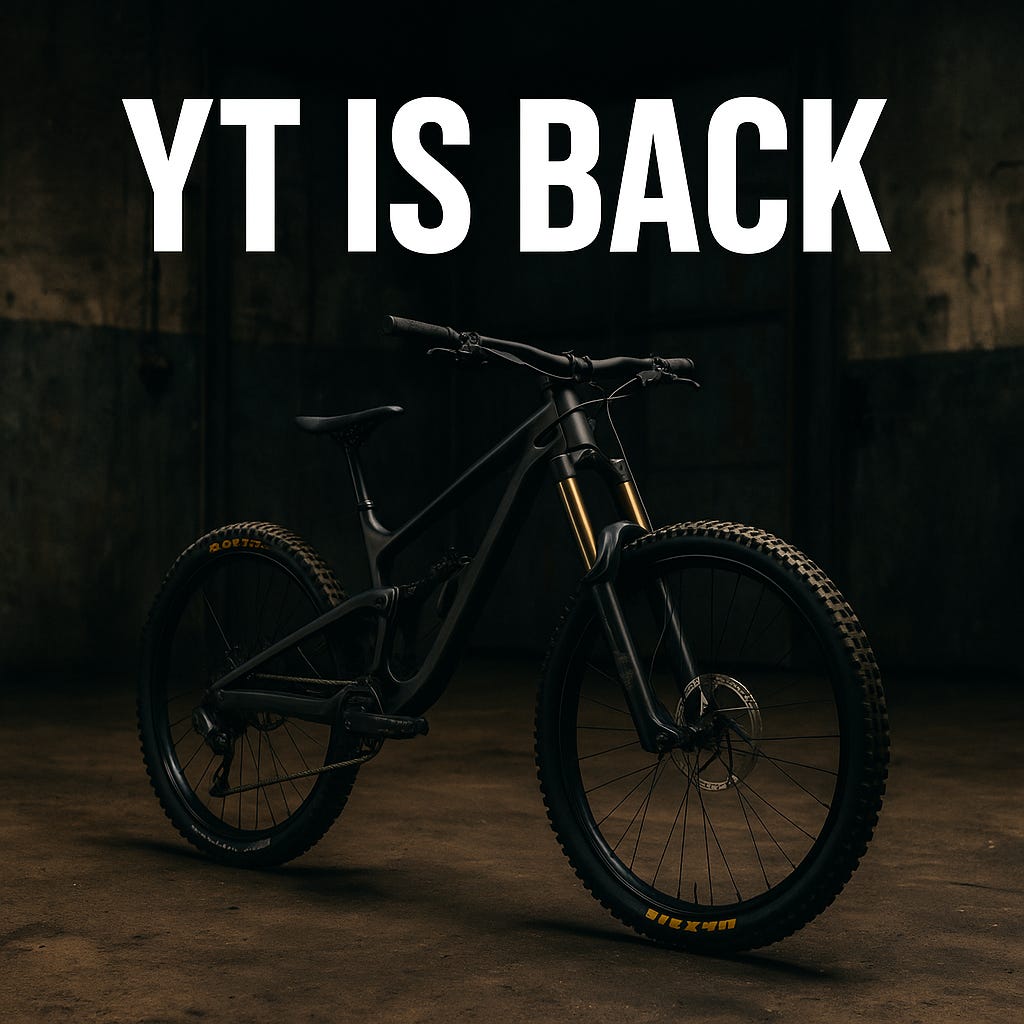
If you are reading this, I am going to assume you already know that YT filed for “self administration” in Germany earlier this summer. In practical terms that is a form of bankruptcy protection. Since then YT has made headlines for not paying athletes, auctioning off assets, and closing regional distribution centers. For a while it looked like the final nail had been hammered into YT’s coffin.
So how did the company re emerge? What exactly happened? And what should we expect going forward?
Before diving into the details, I want to spell out two assumptions. First, you already know who YT is and you have likely read my earlier posts about the brand over the last few months. Second, you understand that YT is a private company, but an unusual one. Thanks to a handful of public filings and disclosures we have a level of visibility into its finances that is rare for a privately held brand. That gives us a lens that is otherwise absent on the (private) side of the industry.
What Happened
I have posted the full timeline as an addendum below, but the short version is straightforward. Markus established a new company early this summer that very recently got renamed YOUNG TALENT INDUSTRIES. That new company purchased the brand, inventory, and the core business operations out of the insolvency estate. All of the unpaid debt and financial obligations remain with the old YT Industries GmbH, which is currently being wound down in insolvency court.
The result is simple. Equity in the old company was wiped out. Creditors will recover whatever the insolvency administrator can generate from the remaining assets. Markus now has full control of the new company, which has already adopted the name and address of the original YT.
In other words, the brand survives, but the old business (and its existing obligations) do not.
What Now
If it is not obvious, Markus has a significant amount of brand damage to repair. Unpaid World Cup athletes whose likeness is still featured on the website. Customers who never received products they paid for. Employees who were let go. Vendors who were left hanging. Even if he is not technically obligated to make those stakeholders whole, it is very hard to see how the brand rebuilds trust without addressing those wounds head on. He will need to pull out the checkbook.

There is also the operational question. Markus has not shown much aptitude for running a durable, financially disciplined company in a high(er) interest rate environment. He has proven he can grow awareness and create hype, but he has not demonstrated the ability to balance that growth with consistent profitability and healthy margins. It cannot only be about volume and kicking the proverbial can down the road anymore. The market is different. Capital has a real cost again.
Some people are already attempting to pin everything on private equity, since Markus sold the company in 2021 and stepped aside as CEO. That argument has a little truth in it, but history does not support a full scapegoat. The financials from the pre private equity era show the same weaknesses. In some ways it was worse. And very few people in the public conversation seem to understand how much the business model changed when YT had to bring assembly in house. As a CFO, I can tell you that move dramatically shifts capital requirements, something I’ve written about previously. You must plan inventory tightly. You must manage cash with real discipline. You must be willing to say no to excessive SKU counts and slow moving categories. That is a completely different game from the flush demand and cheap money years of 2020.
So will this work? Even though the brand is currently unpopular in core riding circles, my answer is yes, it can (hypothetically) work. But the turnaround will require real changes in leadership style and financial maturity. I have already laid out a path in previous posts for how YT can get back to strong margins and a sustainable business model. The question is whether Markus is willing and able to actually execute that playbook.
People can always surprise you. People can change, adapt and grow. That is what keeps business and sport interesting. In this case, the quote that comes to mind is “history does not repeat itself, but it certainly rhymes”. And maybe YT and YOUNG TALENT don’t rhyme, but they certainly seem really close to one and another. All things considered, I’m not betting on this going well, but I’d happily be proven wrong…
Thanks for reading! As always, the best way to support this is to share it with a friend and, if you are interested, head over to my grassroots racing app and sign up for the waitlist www.raliapp.com - Cheers